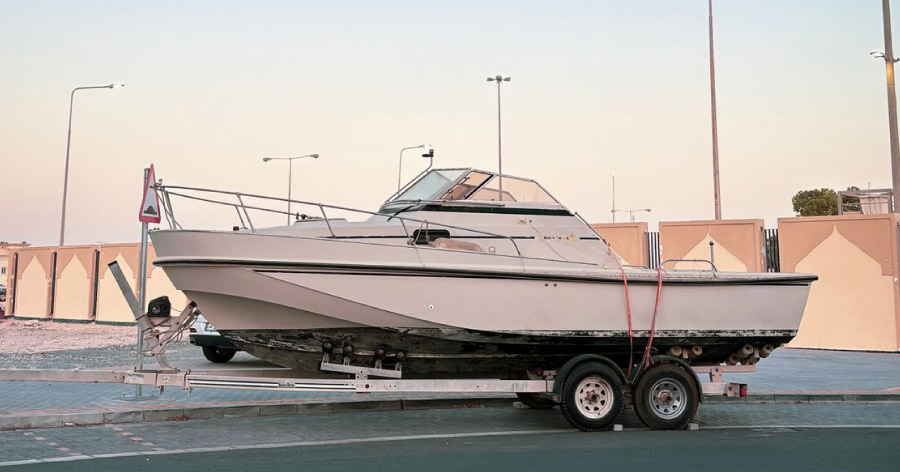
Factors to Consider Before Moving a Boat
How to Move with a Boat: The Cheapest Options
Moving a Boat Is Easier with CubeSmart
There’s a lot of logistics involved in a long-distance relocation, and bringing along your boat can make the process even more complex. Unlike other household items, moving a boat often requires you to coordinate specialized routes, permits, equipment, transport services, and more.
Whether you’re relocating one state over or across the entire country, this guide covers all you need to know about moving a boat, from costs to transportation options. We’ll also discuss various boat storage solutions for a secure and accessible location to keep your vessel when you’re not making waves on the water.
Factors to Consider Before Moving a Boat
Before we dive into how to move with a boat, there are a few important considerations you’ll want to plan for. Taking these factors into account ahead of time will help you navigate both the financial and logistical aspects for a smoother process overall.
Distance of the Move

How far you relocate will determine which mode of transportation makes the most sense when moving a boat. With a short local move, you might be able to tow the boat yourself.
On the other hand, relocating longer distances, such as with interstate and cross-country moves, often requires you to hire a boat transport service. With this solution, professionals will secure the necessary permits and ensure your vessel gets to its destination.
Boat Size and Weight
When moving with a boat, the specific weight and size of your vessel matter. These features directly impact which trailer, towing vehicle, and transport service to use.
For instance, small finishing boats are generally easy to tow with a car and trailer hitch, while it’s more convenient to use professional services for larger recreational crafts, sailboats, and pontoon boats. If you choose to move a large boat on your own, you’ll need a special trailer, an oversize-load permit, and a truck or SUV with heavy towing capabilities.
Cost of Moving a Boat
How much does it cost to get a boat moved? Professional boat transport typically costs about $1.50 to $3.50 per mile, though rates vary based on boat size and weight, route, permits, and the time of year. If your boat is small enough, DIY transportation could be the more affordable choice if you own a trailer and hitch, but don’t forget to factor in extra fees like permits, tolls, fuel, and equipment rentals.
A professional boat transport service generally costs more, but it often includes the permits, and it’s much more convenient than handling the labor and transportation yourself. This is especially true with larger vessels and longer-distance moves.
No matter which solution you end up choosing, don’t forget to include the cost of storage facilities if your new home doesn’t have enough space to accommodate the boat.
Timeline and Scheduling
Your relocation timeline can also influence both the cost of moving a boat and the transportation methods available. If your moving dates are flexible, it helps to relocate in the fall and winter, as you’ll have more equipment and service providers to choose from, and at a potentially lower rate. If you’re moving in the summer, it’s best to book the transport service a few months in advance.
When scheduling your move, take into account temperatures and other weather conditions. For example, if you relocate in the colder months, you’ll want to learn how to store a boat for winter. Likewise, if you relocate at the end of spring, you’ll want to know how to prep your boat for summer. This ensures it’s all ready for a fun outing on the water as soon as you arrive and settle into your new home.
How to Move with a Boat: The Cheapest Options
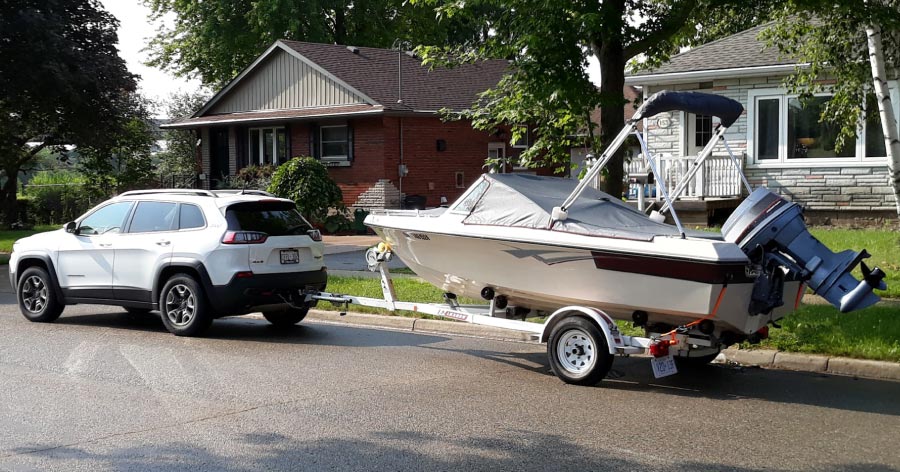
What is the cheapest way to transport a boat? As we touched on earlier, the most affordable option for moving a boat is usually doing it yourself. If you choose to DIY your move, keep in mind that it requires a lot more manual labor, and extra costs can add up throughout the process.
Here’s how to move with a boat while sticking to your overall budget as much as possible.
Tow the Boat Yourself
For short local or regional moves, towing the boat yourself is a practical, cost-effective method if you already have a trailer, hitch, and towing vehicle. This option also offers more scheduling flexibility and control.
Moving with a boat requires care and precision, so invest in all the right equipment and check it thoroughly. Confirm that your trailer, hitch, tie-down straps, lights, and tires are in optimal condition. Then, before hitting the road, make sure your boat is secure and that the towing equipment can handle your vessel’s size and weight.
Rent a Boat Trailer
If you don’t own a trailer, but your vehicle has a sturdy hitch and a sufficient towing capacity, renting a boat trailer is a cheaper alternative to buying one.
Most trailer rental companies offer boat trailers in various sizes, so you can find one to suit your vessel’s towing requirements. It’s important to know, however, that not all rental companies offer trailers for oversized boats, as they need heavier, more specialized towing equipment.
Borrow Equipment
Another way to help manage costs is to borrow a trailer, hitch, straps, and other equipment from relatives, friends, or a community rental marketplace. The equipment must be in optimal condition, as well as compatible with your boat and vehicle.
Before using any borrowed towing equipment, carefully inspect it for damage, corrosion, or other signs of wear to ensure it’s sturdy enough and reliable to make the trip
Use a Peer-to-Peer Hauling Marketplace
One of the most overlooked tips on moving with a boat is to look for independent boat transporters through an online shipping marketplace. This resource can connect you with independent transport providers who might offer a lower rate than conventional boat transportation services. With this option, it’s crucial to obtain price quotes from at least five different haulers, read their customer reviews, and vet their insurance and licensing before you make a decision.
Boat Storage Options
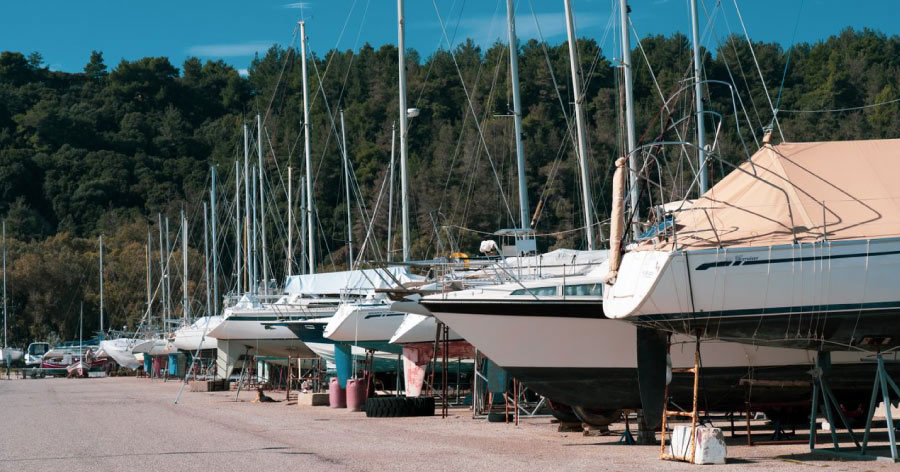
Once your boat arrives at its final destination, the next step is determining where to store it. Here’s a quick rundown of the main storage solutions to choose from. To learn more, check out our comprehensive boat storage guide.
Wet Storage
With wet storage, you’ll store the boat in water at a dock or marina slip, so it’s ready for use without needing to haul it anywhere between outings.
Dry Storage
Dry storage involves storing the boat on land at a secure and accessible location. There are three dry storage methods available:
- Outdoor: Outdoor storage consists of an open storage lot, rack, or yard. It’s often cost-effective, but it could also expose the boat to harsh weather elements. It can be either covered or uncovered.
- Covered: With covered outdoor storage, a roofed structure keeps the boat away from direct sun or rain exposure while it’s stored outside.
- Indoor: With indoor boat storage, your vessel is stored inside a facility that shields the boat from weather and environmental wear.
Moving with a Boat: FAQs
What’s the Easiest Way to Move a Boat?
Moving a boat is much easier when you hire a boat transport service. With this solution, professionals take care of all the logistics, which saves you both time and effort. They’ll plan the route, secure the permits, bring the equipment, secure the boat, and haul it to your new home.
Can You Tow a Boat Long Distance?
In some cases, you can tow a boat across long distances if your vehicle, trailer, and hitch are sufficiently rated for the weight and size of the vessel. First, research the local, regional, or state towing laws, then invest in the right equipment for this distance. If it’s a large boat or a cross-country move, professional assistance often makes more sense.
Do Boats Need Special Permits for Transport?
If your boat exceeds about 14 feet in height and 8.5 feet in width, it’s generally classified as an oversize load, which requires a permit. The exact permit you need for moving a boat can vary based on the specific route and state, so be sure to research this ahead of time.
Moving a Boat Is Easier with CubeSmart
If you’re relocating, downsizing, or just need somewhere to keep your boat between adventures, CubeSmart can help. Our boat storage units offer a convenient solution for your boat when it’s not in use. With easily accessible locations and units for a variety of boat sizes, CubeSmart makes it convenient to maintain a boating lifestyle all year-round. Explore solutions for a variety of storage needs, even things that need climate-controlled storage. Find a CubeSmart storage facility near you.*
*Storage unit sizes are approximate and subject to availability. Temperature and humidity levels within any storage space, including climate-controlled spaces, may vary.