We know how unpredictable life is, and a situation might arise when you need to store your belongings for an extended period. You may decide to pack up your stuff and head out for an RV adventure across the United States, or maybe you need to convert your home office into a nursery. Deployment, moving abroad for work or study, or decluttering your home may be why you’re considering storing items for the long term. Whatever the reason, long term storage differs from short term storage, and preparing for extended storage requires a special approach. That’s why we’ve put together these simple and effective storage tips for long-term storage to make things easy and stress-free.
Packing and Preparing for Long-Term Storage
Packing items to prepare for long term storage requires additional planning and extra care, especially when it comes to fragile items. Take a look at how to prep some common household goods for extended storage.
Declutter Before Packing for Long-Term Storage
Before you start boxing things up, streamline what you own. Decluttering helps you store only what you truly need and value, making the entire process faster, cheaper, and more efficient.
- Protect what matters: Keeping only the essentials reduces overcrowding, which helps prevent crushing, warping, and damage.
- Improve organization: With less to manage, labeling, inventorying, and retrieving items becomes simpler and quicker.
- Prevent deterioration: Removing broken, duplicate, or rarely used items ensures the belongings you choose to store remain in good condition over time.
- Speed up packing and unpacking: A leaner inventory shortens prep time now and makes moving out of storage easier later.
- Feel good knowing exactly what you stored, and why, makes long term storage feel purposeful rather than overwhelming.
Sort items into clear categories: keep, donate, sell, recycle, and discard. Be honest about the condition and usefulness and take photos of what you keep for a simple inventory before packing.
Use New and Sturdy Boxes
Remember, those boxes are going into the storage space for a long duration and need to be of the best quality to ensure they don’t deteriorate over time. Instead of old boxes, invest in new and sturdy boxes that can hold your goods effectively. We also recommend durable plastic containers for long-term storage since they are easily stackable and help preserve your belongings. Make sure you’re buying boxes of the same size and design, which makes balanced stacking easy.
Clean and Polish Furniture

To ensure your pieces of furniture remain in top shape throughout their time in self-storage, make sure they’re clean and dust-free before you move them to the self storage unit.
- Dust all wooden furniture, and use a wood polish to ensure your items don’t fade.
- Vacuum upholstered pieces like sofas and couches, and wipe down leather goods with leather-approved wipes or a leather-safe cleaning solution.
- Loosely cover furniture with light-colored, soft sheets as an added layer of protection.
How to Wrap Furniture for Long-Term Storage
Some of your belongings might need to be wrapped beyond being packed in a box or covered with a sheet. Thoughtful wrapping can reduce dust, moisture, abrasion, and shifting during long-term storage. Choose breathable materials, avoid placing plastic directly on delicate surfaces, and add extra cushioning around corners and protruding parts.
- Couches and Sectionals: Remove cushions and vacuum crevices. Wrap the frame with moving blankets, securing with stretch wrap over the blankets (not directly on fabric or leather). Place cushions in breathable fabric bags or cotton sheets; avoid airtight plastic.
- Upholstered Chairs and Ottomans: Cover with clean cotton sheets or furniture bags made of breathable material. Add corrugated corner protectors to arms and legs, then secure with soft twine or paper tape.
- Wood Furniture (tables, dressers, bookshelves): Apply furniture polish or wax, then wrap surfaces with acid-free packing paper followed by moving blankets. Use foam edge guards on tops and legs to prevent dents and chips.
- Glass Tops and Mirrors: Cover both sides with acid-free paper, add a layer of bubble wrap, and slide into a snug, vertical mirror or TV box. Mark “Fragile” and store upright with spacers.
- Leather Furniture: Treat with a leather conditioner first. Cover with breathable covers or blankets; avoid direct contact with plastic.
- Bed Frames and Headboards: Disassemble when possible. Wrap each piece in foam wrap or moving blankets; bundle hardware in a labeled bag taped to the main frame.
- Small Decor (lamps, vases, figurines): Remove lampshades and bulbs. Wrap shades in tissue or foam sheets and box separately. Wrap bases and delicate pieces individually with acid-free paper, then bubble wrap; fill voids with crumpled paper to prevent shifting.
- Rugs: Vacuum, then roll (not fold) with the pile facing inward. Wrap in a breathable rug wrap or paper; avoid plastic. Store rugs raised off the floor.
Store Mattresses the Right Way
- Be sure to clean all mattresses with an upholstery cleaner and then vacuum both sides. This will ensure the mattress is clean before it goes into the storage unit.
- Invest in a good-quality mattress cover to encase the entire mattress. Opt for a lightweight and breathable plastic covering and secure it with tape.
- When placing the mattress in the unit, make sure that you lay it flat to prevent sagging.
- Never place any items over the mattress, as this can damage its shape.
Preparing Clothes and Fabrics for Long-Term Storage
- Storing clothes and soft items like cushions in vacuum-sealed bags is not just a great space saving storage hack, but it also shields apparel and fabrics for added protection.
- Using vacuum-sealed bags for storing clothes and fabrics during long term storage keeps them fresh and clean. Don’t forget to clean bags first using a vacuum or duster.
How to Store Books for Long Term Storage
Proper book prep and packing keeps pages flat and bindings strong during extended storage.
- Sort and Clean: Remove bookmarks, paper clips, and loose inserts. Dust covers and page edges with a soft, dry cloth to keep grit from abrading pages.
- Choose the Right Container: Use small, sturdy boxes or archival-quality plastic bins with tight-fitting lids. Smaller boxes prevent overpacking and reduce strain on spines.
- Line and Cushion: Line boxes with acid-free paper. Place a silica gel pack inside each box to help control humidity.
- Pack Upright Like on a Shelf: Stand books vertically, spine-to-spine, with similar sizes together. Fill any gaps with crumpled acid-free paper, so books don’t lean or slump.
- Alternative Stacking: For oversized or fragile volumes, lay flat and stack no more than 3–4 high, alternating spine direction to distribute weight evenly.
- Avoid Plastic Directly on Books: Do not shrink wrap or seal books in airtight plastic.
- Label Clearly: Mark boxes “Books,” note categories (e.g., cookbooks, textbooks, first editions), and indicate “Heavy” to prevent mishandling.
- Store Off the Floor: Place boxes on pallets or shelving to improve airflow.
Seal Clothes and Fabrics
Storing clothes and soft items like cushions in vacuum-sealed bags is not just a great space saving storage hack, but it also shields apparel and fabrics for added protection. Using vacuum-sealed bags for storing clothes and fabrics during long-term storage keeps them fresh and clean.
How to Pack for Long-Term Storage in your Storage Unit
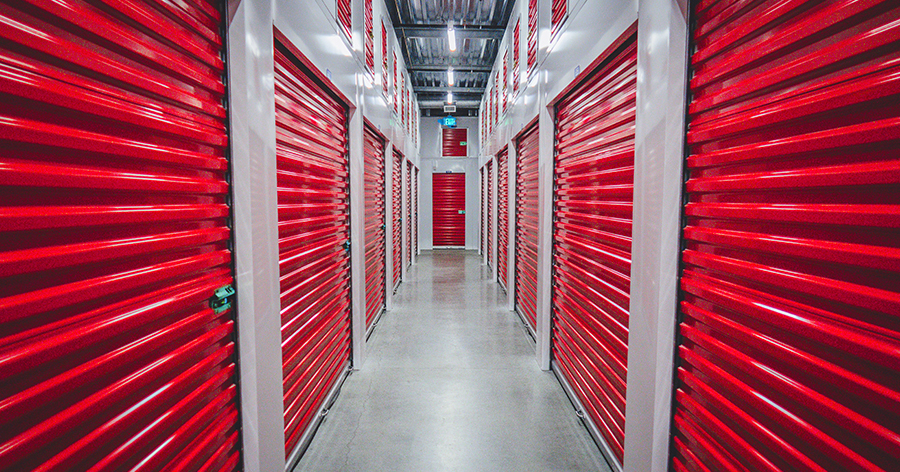
Before you stack boxes in your storage unit, make sure it’s clean. Sweep the floor or use a vacuum to remove all traces of dirt and debris. For long-term storage, we recommend placing boxes on a raised platform rather than directly on the unit floor. Use pallets or cinder blocks to create an elevated base for the boxes.
Next, create a simple layout map so you know where categories are stored without unpacking.
- Pack efficiently with uniform box sizes for easier stacking.
- Place heaviest and least-used items at the bottom and toward the back; put lighter items on top.
- Clearly label every box on multiple sides with contents and a category (e.g., seasonal decor, kitchenware) and assign each box a number that matches an inventory list or spreadsheet.
- Use clear bins, when possible, for quick visual identification.
- Fill boxes completely to prevent collapse and use shelving to create stable vertical tiers.
- Because access will be infrequent, build tight, stable stacks and leave an aisle only along one side for occasional checks.
- Store small hardware in labeled bags and tape them to the corresponding item.
Additional Tips for Long-Term Storage: Top FAQs Answered
Find answers to common FAQs regarding long-term storage.
What Is Long-Term Storage?
Long-term self-storage refers to keeping household items or vehicles in a self-storage facility over an extended period. People usually opt for long-term storage if they’re:
- Moving out of the country for leisure, work, deployment, or study
- Implementing a major home improvement project and need to clear out space
- Decluttering an overfilled home or office to organize this space
How Much Does Long-Term Storage Cost?
The cost of renting a long-term storage unit varies depending on the location, unit size, and additional features like climate-controlled storage. To find out exact costs, give one of our storage locations a call.
Do I Need Climate-Controlled Units for Long-Term Storage?
Opting for a climate-controlled unit provides a consistent environment tailored to maintain your belongings during extended periods in storage. CubeSmart offers climate-controlled storage solutions designed to maintain stable conditions, ensuring your items stay in an optimal environment.
Call today to speak to our award-winning customer service team and find out more about our services, discounts, and special rental offers that can help you secure a great deal on your long-term storage. CubeSmart storage locations are conveniently available across the country and our teammates are ready to assist with all your storage needs.